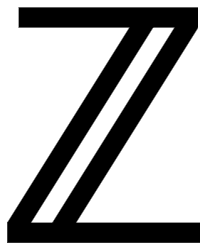
The  -th Harmonic number, denoted
  is defined by the sum of the reciprocals of the first natural numbers:
![\[H_n = \sum_{k=1}^n \frac{1}{k} = 1 + \frac{1}{2} + \frac{1}{3} + \dots + \frac{1}{n}\]](https://zivmaths.com/wp-content/ql-cache/quicklatex.com-2d59d5732a0650f8983cee93f35b7d65_l3.png "Rendered by QuickLaTeX.com")
This number has quite interesting properties. On thing we could consider when is finite is the quotient of the sum. If we write it as
![\[H_n = \sum_{k=1}^n \frac{1}{k} = \frac{u_n}{v_n}, \quad (u_n, v_n)=1, \quad v_n>0\]](https://zivmaths.com/wp-content/ql-cache/quicklatex.com-c93e317205255b616d0b8e2751492339_l3.png "Rendered by QuickLaTeX.com")
Then many problems raise. Here, we have a problem concerning when is the denominator the lcm of  .
.
2022 AMC 12A Problem 23
Let  and
and  be the unique relatively prime positive integers such that
![\[\frac{1}{1}+\frac{1}{2}+\frac{1}{3}+\cdots+\frac{1}{n}=\frac{h_n}{k_n}.\]](https://zivmaths.com/wp-content/ql-cache/quicklatex.com-269b14ad2197441351e4eb8fb4eda85d_l3.png "Rendered by QuickLaTeX.com")
 denote the least common multiple of the numbers
  . For how many integers with
  is
is  ?
?
The solution would be straightforward. For  in the prime factorization of , consider quotients of the form
  , where
  ,
, 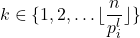 . Sum then up and find when does the denominator of the sum is divisible by
  .
.
This interesting problem prompts us to relate a prime  with this fraction. Now let’s introduce a result of it.
Theorem 1 If  , then
![\[1+\frac{1}{2}+\dots + \frac{1}{p-1}\equiv 0 \pmod {p^2}\]](https://zivmaths.com/wp-content/ql-cache/quicklatex.com-26f5150784f0ece77c31e50fb6237898_l3.png "Rendered by QuickLaTeX.com")
That is, the numerator is always divisible by  .
.
Proof. For  ,
,
![\[\frac{1}{i}+\frac{1}{p-i}=\frac{p}{i(p-i)}\equiv 0\pmod p\]](https://zivmaths.com/wp-content/ql-cache/quicklatex.com-0666621d1fdf4d742aae8bacd41b0253_l3.png "Rendered by QuickLaTeX.com")
Thus, we must have
![\[1+\frac{1}{2}+\dots + \frac{1}{p-1}\equiv 0 \pmod p\]](https://zivmaths.com/wp-content/ql-cache/quicklatex.com-cd3877b4aee991033d9b6475fc955457_l3.png "Rendered by QuickLaTeX.com")
Consider the product
![\[(p-1)!\left(1+\frac{1}{2}+\frac{1}{3}+\dots +\frac{1}{p-1}\right)\]](https://zivmaths.com/wp-content/ql-cache/quicklatex.com-e5d7add6fffaeac92f787dc987802993_l3.png "Rendered by QuickLaTeX.com")
It has the same equivalence relation with respect to the original one since  . It remains to prove that
![\[(p-1)!\left(1+\frac{1}{2}+\frac{1}{3}+\dots +\frac{1}{p-1}\right)\equiv 0 \pmod {p^2}\]](https://zivmaths.com/wp-content/ql-cache/quicklatex.com-6e258343cfd85de9772e2c9172d7a4c0_l3.png "Rendered by QuickLaTeX.com")
Consider the identity
![\[(p-1)! = p^{p-1}-A_1p^{p-2}+\dots -A_{p-2}p+A_{p-1}\]](https://zivmaths.com/wp-content/ql-cache/quicklatex.com-2feacfbba54535e76abdfe1155eb0481_l3.png "Rendered by QuickLaTeX.com")
where  .
.
We have  and
and 
From the identity, we can also deduce that
![\[kA_k=\binom{p}{k+1}+\binom{p-1}{k}A_1+\dots +\binom{p-k+1}{2}A_{k-1}\]](https://zivmaths.com/wp-content/ql-cache/quicklatex.com-e6ba5ce0ed3423029c3d6e6c7bbc8302_l3.png "Rendered by QuickLaTeX.com")
Hence  for
for  . It follows that
  .
.
 and
and 
Concerning the fraction  , Eswarathasan, Arulappah, and Eugene Levine introduced the sets of integers
![\[J=J(p)=\{n\geq 0\mid u_n\equiv 0\pmod p\}\]](https://zivmaths.com/wp-content/ql-cache/quicklatex.com-cfd4f16c8cd59476b304c9d418f154c2_l3.png "Rendered by QuickLaTeX.com")
![\[I=I(p)=\{n\geq 0\mid v_n\not\equiv 0\pmod p\}\]](https://zivmaths.com/wp-content/ql-cache/quicklatex.com-8d87b74a476aed07f1b23bff49b5daa0_l3.png "Rendered by QuickLaTeX.com")
Our aim is to determine the exact elements of these two sets. From our previous proof, we know that  . In fact,
  whenever
  . Eswarathasan, Arulappah, and Eugene Levine classified primes of which
  as harmonic. They gave two two conjectures.
Conjecture 1: For all primes , is finite.
Conjecture 2: The set of harmonic primes is infinite.
Carlo Sanna gave this conjecture a further step. The conjecture given is
Conjecture: ![J_p \cup [1, x]](https://zivmaths.com/wp-content/ql-cache/quicklatex.com-1fa0c577a88acc825c98341f7d0c3897_l3.png "Rendered by QuickLaTeX.com") is less than
is less than 
Eswarathasan, Arulappah, and Eugene Levine. “p-Integral Harmonic Sums.” Discrete Mathematics, vol. 91, no. 3, Sept. 1991, pp. 249–57. https://doi.org/10.1016/0012-365x(90)90234-9.
Boyd, D. W. (1994). A p-adic Study of the Partial Sums of the Harmonic Series. Experimental Mathematics, 3(4), 287–302. https://doi.org/10.1080/10586458.1994.10504298
Leave a Reply